

 Blog
Quick answer: A good garage door maintenance routine in Montgomery, TX includes a monthly visual check, lubrication of moving parts every three to six months, tightening hardware twice a year, testing the auto-reverse and balance, cleaning the tracks and sensors, and replacing worn weatherstripping. Because Texas heat and humidity dry out lubricants and speed up rust, a professional garage door tune-up once a year is the best way to catch worn springs, cables, and rollers before they fail.
Key Takeaways
- Do a quick visual and sound check every month.
- Lubricate moving parts every three to six months, more often in summer.
- Test the auto-reverse, sensors, and door balance regularly.
- Leave springs, cables, and bottom brackets to professionals.
- Book a professional tune-up at least once a year.
Most garage doors open and close more than a thousand times a year. That is a lot of work for springs, cables, rollers, and an opener, and in a hot, humid climate like Montgomery County, those parts wear faster than they would in a dry, mild one. A simple maintenance routine keeps the door quieter, safer, and more reliable, and it can prevent the kind of breakdown that leaves a vehicle trapped inside. This garage door maintenance checklist covers what to do monthly, seasonally, and yearly for residential and commercial garage doors.
Why Garage Door Maintenance Matters More in Montgomery, TX
- Heat: Long summers in the 90s dry out lubricants on hinges, rollers, and springs and can stress opener motors in hot, unvented garages.
- Humidity: Moisture around Lake Conroe and the region’s frequent humid days speed up rust on springs, cables, and bottom brackets.
- Storms: Heavy rain, wind, and power surges during storm season can affect tracks, panels, weatherstripping, and opener electronics.
- Pollen and dust: Spring pollen and dust collect in tracks and on sensor lenses, causing grinding and false sensor triggers.
Monthly Garage Door Checklist
1. Watch and listen
Open and close the door while standing inside. Look for jerky movement, an uneven door, or gaps on the sides. Listen for grinding, squeaking, or popping. New noises are often the first sign of wear.
2. Look at the springs and cables
Without touching them, check the springs for gaps in the coils or stretching, and look at the cables near the bottom brackets for fraying or rust.
3. Test the auto-reverse
Place a roll of paper towels or a piece of wood on the floor in the door’s path and close the door. It should reverse as soon as it touches the object. If it does not, stop using the automatic opener until it is adjusted.
4. Test the photo-eye sensors
Start closing the door and wave an object through the beam near the floor. The door should stop and reverse. Wipe the sensor lenses with a soft cloth if they are dusty.
Every Three to Six Months
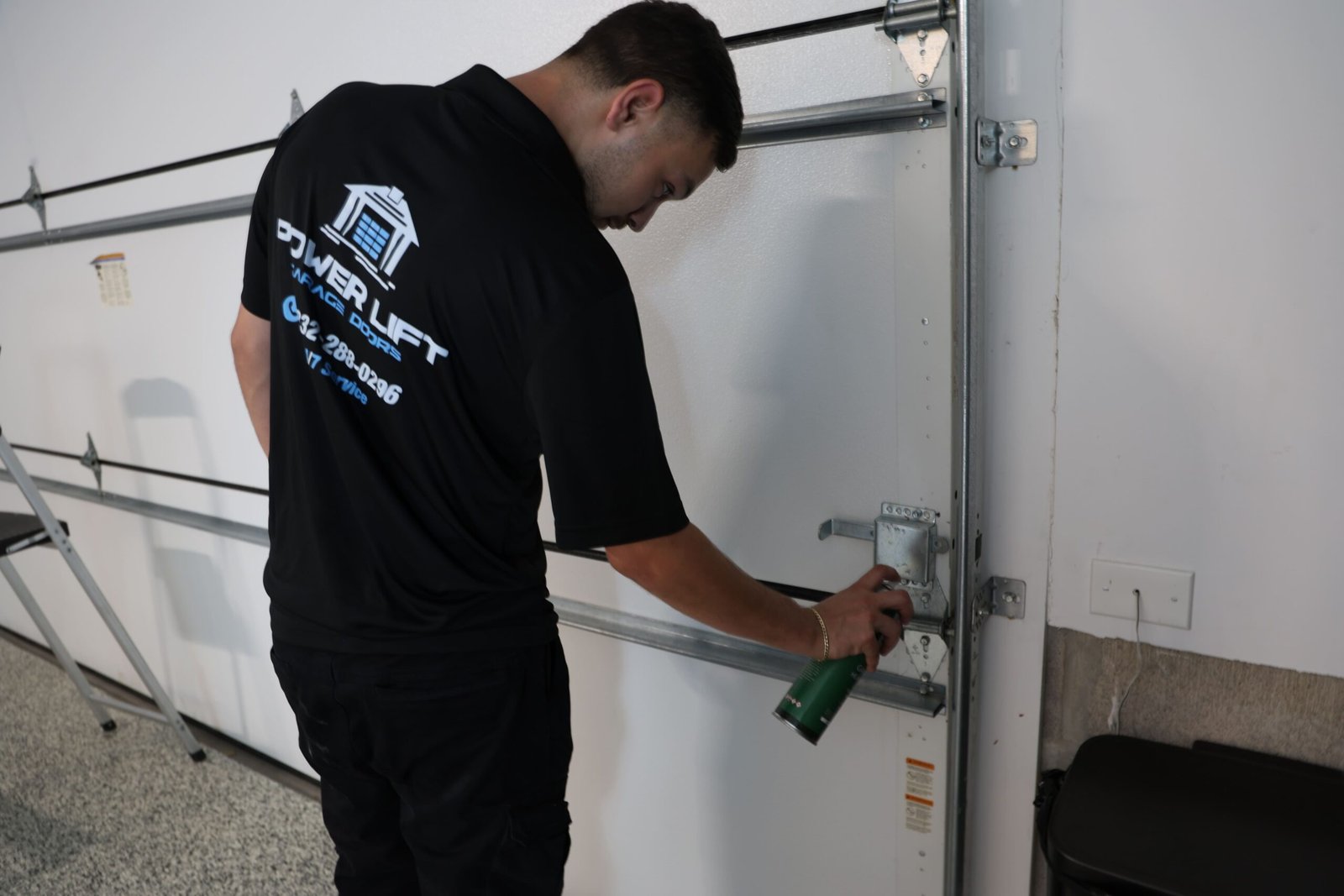
5. Lubricate moving parts
Use a garage door lubricant, such as a silicone or lithium-based spray, on hinges, roller bearings, torsion springs, and bearing plates. In Montgomery, lubricating closer to every three months during summer helps offset faster drying. Do not grease the inside of the tracks; it attracts dirt.
6. Clean the tracks
Wipe the tracks with a damp cloth to remove dirt, pollen, and debris. Check for dents or bends while you are there.
7. Check the weatherstripping
Inspect the rubber seal along the bottom of the door and the stops along the sides. Cracked, flattened, or missing seals let in heat, water, pests, and dust. Replacing worn weatherstripping also helps keep a Texas garage cooler.
Twice a Year
8. Tighten hardware
Use a socket wrench to snug the bolts on hinges and track brackets. Do not loosen or adjust the bottom brackets, cables, or anything attached to the springs, which are under high tension.
9. Test the door’s balance
With the door closed, pull the emergency release cord to disconnect the opener. Lift the door by hand to about halfway and let go. A balanced door stays in place. If it falls or rises, the springs need professional adjustment. Reconnect the opener afterward.
10. Inspect the rollers
Look for cracked, chipped, or wobbly rollers. Worn rollers cause noise and can lead to the door coming off track.
11. Check the opener
Replace remote and keypad batteries, check the chain or belt for slack, and make sure the opener’s light, sensors, and wall button work. If your opener has a battery backup, test that it still holds a charge.
Once a Year: Professional Tune-Up
Some maintenance tasks should be handled by a trained technician because they involve parts under high tension. An annual garage door tune-up typically includes:
- A full inspection of springs, cables, drums, rollers, hinges, tracks, and the opener
- Spring tension and balance adjustment
- Lubrication of all moving parts
- Track alignment and hardware tightening
- Testing and adjusting opener force and travel limits
- Safety sensor and auto-reverse testing
- Recommendations for parts that are close to the end of their life
Many owners schedule the tune-up in early spring, before the summer heat, or in the fall, before cooler mornings that can expose weak springs.
Maintenance for Commercial Garage Doors
Commercial sectional and roll-up doors on warehouses, shops, and service bays cycle far more often than residential doors. For these properties, quarterly or semi-annual professional maintenance is common. A commercial maintenance plan focuses on:
- Springs and cables rated for high cycle counts
- Operator motors, drives, and safety devices
- Guides, curtains, and barrels on roll-up doors
- Impact damage from forklifts and vehicles
- Weather seals that protect inventory and climate-controlled spaces
Planned maintenance is usually far less disruptive than an unexpected failure during business hours.
Warning Signs You Should Not Ignore
Stop using the door and call a professional if you notice:
- A loud bang from the garage
- A door that is crooked or hangs lower on one side
- Frayed or loose cables
- A door that falls quickly when released halfway
- Rollers that have left the track
- An opener that strains, stops, or reverses repeatedly
Learn more about common garage door repairs in Montgomery, TX, or read our guide on troubleshooting a garage door opener that will not work.
Printable Garage Door Maintenance Schedule
| Task | How Often | DIY or Pro |
|---|---|---|
| Visual and sound check | Monthly | DIY |
| Auto-reverse and sensor test | Monthly | DIY |
| Lubricate moving parts | Every 3 to 6 months | DIY |
| Clean tracks and sensors | Every 3 to 6 months | DIY |
| Inspect weatherstripping | Every 6 months | DIY |
| Tighten hinge and track hardware | Twice a year | DIY |
| Balance test | Twice a year | DIY test, Pro adjustment |
| Spring, cable, and drum service | Yearly | Pro only |
| Full tune-up and opener adjustment | Yearly (more often for commercial) | Pro |
Seasonal Garage Door Tasks for Montgomery, TX
Spring
Clean pollen and dust out of the tracks and off the sensor lenses. Check the weatherstripping before summer heat arrives, and schedule an annual tune-up if one is due.
Summer
Lubricate hinges, rollers, and springs, since heat dries out lubricants faster. Keep the garage ventilated to reduce stress on the opener, and check that the door closes fully so the seal keeps hot air out.
Fall
After storm season, look for loose hardware, dented panels, or a track that has shifted. Test the opener’s battery backup and replace remote batteries.
Winter
Cooler mornings can reveal weak springs. If the door feels heavier, moves slowly, or makes new popping sounds, have the springs checked before they fail.
When Maintenance Is Not Enough
Even a well-maintained door eventually reaches the end of its life. If panels are rusting through, the door is badly dented, replacement parts are no longer available, or you are paying for major repairs every year, a new door may be the better investment. Newer insulated doors can also help keep a Texas garage cooler and quieter. A technician can help you compare the cost of continued repairs with the value of a replacement.
Frequently Asked Questions
How often should a garage door be serviced?
Most residential garage doors should have a professional tune-up once a year. Commercial doors that open and close many times a day often need service every three to six months.
What is the best lubricant for a garage door?
A garage door lubricant, typically a silicone or lithium-based spray, works best. Avoid heavy grease on tracks and avoid using general-purpose cleaners as a long-term lubricant.
Does Texas humidity affect garage doors?
Yes. Humidity speeds up rust on springs, cables, and hardware, and it can cause wood doors to swell. Regular lubrication and inspections help reduce the impact.
Can maintenance extend the life of my garage door opener?
Yes. A balanced door with lubricated parts puts less strain on the opener motor and gears, which helps the opener last longer.
Should I lubricate the garage door tracks?
No. The tracks should be kept clean, not greased. Lubricant inside the tracks collects dirt and can make rollers skid instead of roll.
Schedule Your Garage Door Tune-Up
Keep your garage door running smoothly through every Texas season. Call PowerLift Garage Door Services at (346) 819-8288 or request a free on-site estimate for residential or commercial garage door maintenance in Montgomery and nearby communities.